
Is AI changing the foundational principles of Digital Marketing? The landscape of digital marketing is undergoing a significant transformation, spurred by AI-driven content creation tools such as ChatGPT, ContentShake, and Typeface. These innovations are not mere incremental improvements; instead, they are revolutionary disruptors, altering SEO tactics, social media interaction, and advertising efficiency at a speed few industries have previously experienced. With the global AI marketing industry expected to expand from $47.32 billion in 2025 to $107.5 billion by 2028, investors who overlook this trend risk missing one of the most promising opportunities of the decade.
The Shift in SEO Effectiveness
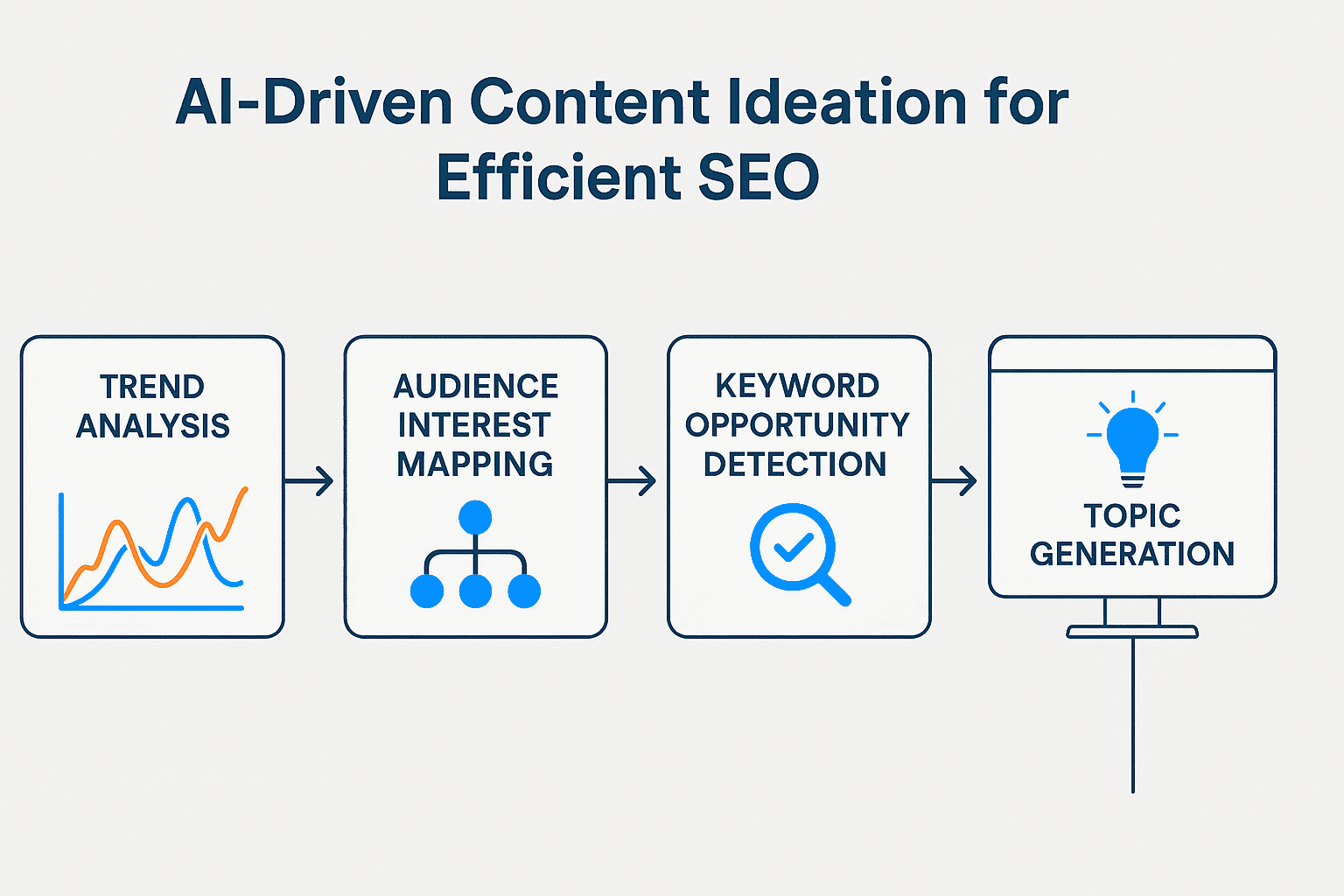
The effect of AI on SEO is truly remarkable. In 2023, content created by humans ranked better than that produced by AI in search results by a statistically significant margin. However, by 2025, this disparity is expected to narrow considerably. A SEMRUSH analysis from 2025 revealed that 57% of AI-generated content appears in the top 10 search results, compared to 58% for human-generated content, indicating rapid technological advancement. A specific example is SE Ranking's test on a well-established domain (Domain Authority 78), which revealed that AI-supported articles garnered 138,000 impressions and 866 clicks over six months, achieving a #1 ranking for a competitive keyword. Notably, one article attracted 14 backlinks within four months, showing that AI-generated content can build authority when combined with solid domain signals.
Nonetheless, success depends on context. New entrants adopting AI content struggled, with average rankings falling 20 to 30 positions behind. This highlights a crucial insight: AI tools enhance existing strengths. Companies that possess strong domain authority and backlink histories, such as Fortune 500 brands utilizing Typeface, witness exceptional outcomes, whereas newcomers face significant challenges without foundational SEO support.
Social Media and Advertising: The Democratization of Creativity
The influence of AI reaches beyond SEO. Currently, 71% of social media marketers employ AI tools, and 71% indicate that AI-generated content surpasses human-created alternatives in quality. Platforms such as Instagram and YouTube, where ephemeral content like stories and reels yield an average or higher ROI of 96%, are becoming fierce battlegrounds for AI-driven automation. Typeface illustrates this transformation with its Visual Inspiration Studio, which streamlines ad creation by converting product information from URLs into creatives tailored for specific platforms, saving marketers over an hour daily on creative brainstorming. For companies like Coca-Cola and Unilever, this results in faster-paced and more cohesive campaigns across TikTok, Facebook, and Google. The statistics are compelling: $740.3 billion is projected to be invested in global digital advertising by 2025. Businesses that leverage AI to refine advertising expenditures—such as those using Content Shake's multi-step prompts for keyword alignment—are poised to capture a disproportionate share of the market.
The Competitive Advantage: Why Underutilization Poses a Risk
Despite the excitement surrounding AI, 38% of marketers equipped with AI tools do not fully utilize them, and 70% lack training in generative AI. This creates a two-tier market where early adopters who master the subtleties of AI achieve scalable, data-informed outcomes while others remain stagnant. For instance, a 2023 case study of an AI provider that published 500 AI articles in 30 days resulted in a 50% drop in business, underscoring the dangers of complete automation. The key takeaway? Human oversight remains essential. Hybrid models, where AI generates drafts and humans refine them for nuanced understanding and E-E-A-T (Experience, Expertise, Authoritativeness, Trustworthiness), are considered the ideal approach.